
 EN
EN
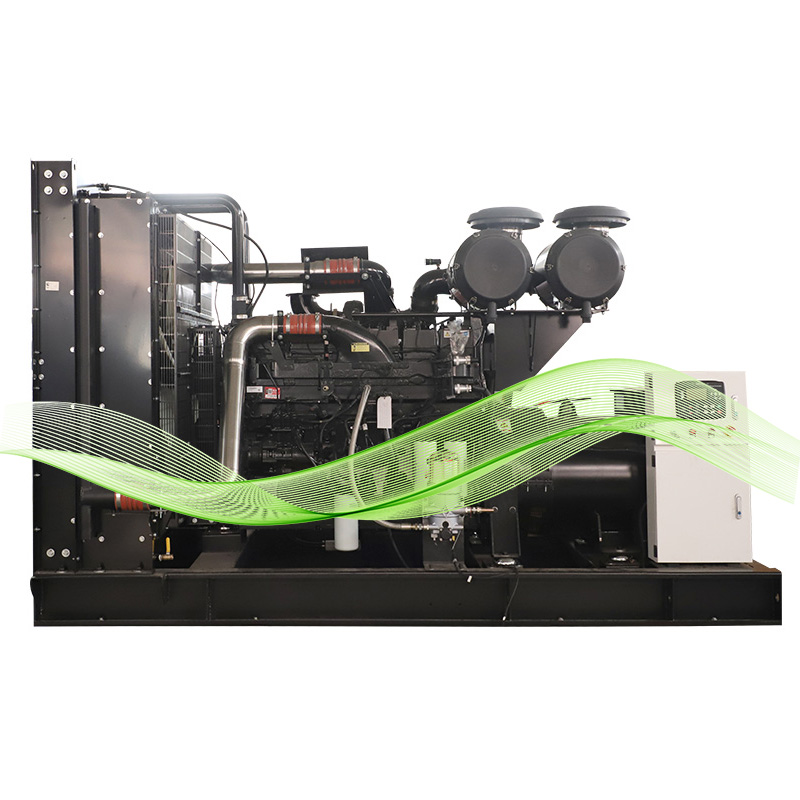
Classification Society Certification: The Cornerstone of Marine Diesel Generator Safety
ABS, DNV, and LR Type Approval: Core Design and Performance Requirements for Marine Diesel Generators
Leading classification societies—ABS (American Bureau of Shipping), DNV (Det Norske Veritas), and LR (Lloyd's Register)—enforce rigorous type approval processes that verify marine diesel generators can withstand the extreme physical and environmental stresses of maritime operations. Their testing protocols validate critical safety and performance thresholds, including:
- Structural integrity during 15° continuous rolling and 22.5° pitching motions
- Salt spray corrosion resistance exceeding 1,000 hours in accelerated testing
- Vibration tolerance up to 4.5g vertical acceleration without operational interruption
- Automatic shutdown for overspeed, low oil pressure, high coolant temperature, or loss of lubrication
Generators must sustain uninterrupted operation at 110% overload while maintaining voltage regulation within ±2.5%. These requirements ensure reliability where failure could compromise vessel stability, navigation, or crew safety.
IACS Unified Requirements E26/E27: Standardizing Global Certification for Reliability and Interchangeability
The International Association of Classification Societies (IACS) developed Unified Requirements E26 and E27 to harmonize certification across its 12 member societies—including ABS, DNV, and LR. E26 governs electromagnetic compatibility and insulation coordination; E27 specifically addresses rotating machinery like marine diesel generators. This alignment delivers tangible operational benefits:
- Enables cross-society component interchangeability without re-certification
- Reduces redundant testing costs by up to 30% for manufacturers
- Ensures consistent safety margins for excitation systems and control logic
- Limits total harmonic distortion to <5% across all load levels
By replacing fragmented national standards with unified benchmarks, IACS strengthens global fleet reliability—especially vital for emergency power systems where continuity is non-negotiable.
SOLAS Chapter II-1: Redundancy, Blackout Prevention, and Emergency Power Supply for Marine Diesel Generators
The SOLAS regulations, specifically Chapter II-1, contain strict rules designed to keep ships safe when power goes out at sea. Ships need multiple generators as backup. If one generator breaks down, another has to kick in automatically within just 30 seconds to take over the workload. When there's not enough power available, special systems called load shedding cut power to non-essential parts first while keeping critical functions running. Navigation systems, communication gear, fire pumps, and steering mechanisms get priority during these situations. There's also an emergency generator requirement that ships must follow. This backup needs to start working within 45 seconds after the main power fails and should run long enough to power life saving equipment for around 18 hours straight. Importantly, this emergency generator has to sit in its own separate area above water level, away from where the main engines operate. Regular testing is mandatory too. Every week, crews simulate complete power failures to check everything works properly. Failing these checks can lead to serious problems like being stopped at ports or losing certification entirely. According to recent data from the Maritime Safety Review published last year, following all these protocols cuts down the chance of total power failure by roughly 85% compared to older setups that don't meet modern standards.
IEC 60092-352 (Marine Cables) and IEC 60945 (Marine Equipment): Ensuring Electromagnetic Compatibility and Harsh-Environment Performance
Marine diesel generators have it rough out there at sea. They face constant battles with salty air eating away at components, relentless vibrations shaking everything loose, temperature extremes going from freezing cold to scorching hot, plus those pesky electromagnetic fields messing with sensitive electronics. To tackle all this chaos, the International Electrotechnical Commission has put together some pretty important guidelines. Standard IEC 60092-352 deals specifically with cables that can stand up to saltwater corrosion over time while still resisting flames. Then there's IEC 60945 which makes sure equipment doesn't create interference problems or get knocked out by signals coming from ship radars, radios, or even the main engines themselves. When talking about enclosure ratings, most compliant systems need to meet IP56 standards meaning they can handle heavy water spray and keep dust out. And let's not forget about operating ranges either — these machines must work reliably whether temperatures drop below freezing or climb into tropical heat zones. All these specs matter because nobody wants electrical arcs sparking in damp conditions or communication signals getting lost during a storm. After all, losing power on a ship isn't just inconvenient, it can literally put lives at risk.
Operational Validation: Bridging Certification with Real-World Marine Diesel Generator Reliability
Getting certified means meeting certain design and testing standards, but nothing beats actual operation to see how marine diesel generators hold up against real sea conditions. Most manufacturers run their equipment through long term endurance tests that go way beyond what happens in standard labs. These tests mimic decades worth of harsh environments including salt air corrosion, constant vibrations from waves, temperature changes between day and night, plus all sorts of unpredictable power demands. When it comes to handling sudden power needs, there's strict checking involved. A good generator should handle going from zero to full power almost instantly when needed, like during emergency thruster use or when storms hit and suddenly need extra electricity. The system needs to stay stable during these moments without dropping voltage levels or messing up the frequency output.
Field data shows generators subjected to comprehensive validation protocols experience 40% fewer failures during emergency operations than those meeting only minimum certification requirements. Key validation elements include:
- Thermal cycling across tropical (+55°C) and arctic (-25°C) extremes
- Corrosion resistance testing in salt-spray chambers replicating open-ocean exposure
- Dynamic load sequencing mimicking harbor maneuvers, heavy weather transits, and rapid load transfers
This process transforms regulatory compliance into demonstrable resilience—ensuring that when waves breach decks or engines run continuously under heavy load, the marine diesel generator delivers power exactly as engineered: reliably, safely, and without compromise.
FAQ Section
What are the main classifications societies mentioned in the article? The article discusses ABS (American Bureau of Shipping), DNV (Det Norske Veritas), and LR (Lloyd's Register).
How long should an emergency generator be able to run according to SOLAS Chapter II-1? According to the regulations, the emergency generator should be able to run life-saving equipment for around 18 hours continuously.
What is the importance of IEC standards for marine diesel generators? IEC standards ensure that marine diesel generators have proper electromagnetic compatibility and are capable of withstanding harsh environmental conditions like saltwater corrosion, vibrations, and extreme temperatures.
Table of Contents
-
Classification Society Certification: The Cornerstone of Marine Diesel Generator Safety
- ABS, DNV, and LR Type Approval: Core Design and Performance Requirements for Marine Diesel Generators
- IACS Unified Requirements E26/E27: Standardizing Global Certification for Reliability and Interchangeability
- SOLAS Chapter II-1: Redundancy, Blackout Prevention, and Emergency Power Supply for Marine Diesel Generators
- IEC 60092-352 (Marine Cables) and IEC 60945 (Marine Equipment): Ensuring Electromagnetic Compatibility and Harsh-Environment Performance
- Operational Validation: Bridging Certification with Real-World Marine Diesel Generator Reliability
- FAQ Section