
 EN
EN
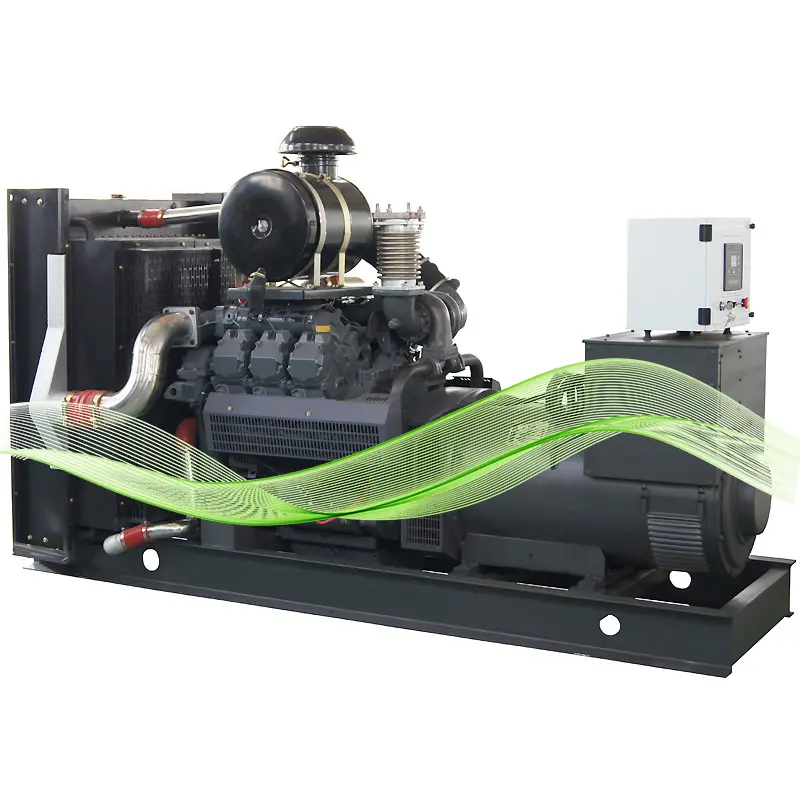
Key Cummins Generator Models for Industrial Backup Power
High-Output Standby Models: QSK60, QSK95, and QSK120 Series
Facilities that need serious backup power will find what they're looking for in the QSK60 series which goes up to 2000 kW, followed by the QSK95 at 2500 kW and finally the QSK120 hitting 3000 kW maximum output. These engines were built specifically for places like data centers and big manufacturing plants where power demands are really high. They can manage tough inductive loads without breaking a sweat, keeping harmonic distortion under control at around 0.5% or less. That's actually way better than what IEEE 519 requires, and they meet all those strict EPA Tier 4 Final emission rules too. The cooling system has built-in redundancy so things don't go south if something fails, plus every unit gets put through intense tests at the factory. All this adds up to about 99.9% uptime, which matters a lot since losing power costs industries roughly $740k each hour according to research from Ponemon Institute back in 2023.
Mid-Range Reliability Platforms: QSB7.7, QSL9, and QSM11
Designed for hospitals, commercial campuses, and mid-sized industrial sites, these platforms balance compact footprint with robust performance:
- QSB7.7: Delivers 175–300 kW with an integrated DCA controller for real-time monitoring of coolant, oil, and battery health—enabling predictive maintenance and eliminating single-point failures
- QSL9: Provides 275–400 kW output and achieves 50% load ramp in just 8 seconds, making it ideal for fast-response applications like emergency lighting or HVAC restarts
- QSM11: Offers 330–450 kW with high-pressure common-rail fuel injection, improving fuel efficiency by 15% versus legacy mechanical systems
All three meet ISO 8528-5 transient response requirements and include vibration-dampened mounts to maintain sound levels under 72 dBA at 7 meters—essential for noise-sensitive environments.
Smart Modular Solutions: PowerCommand® 3.3 and SmartGen¢ Integration
Modern industrial backup power relies on intelligent, scalable control—not just raw output. The PowerCommand® 3.3 controller enables remote diagnostics, firmware updates, and predictive analytics via secure cloud-connected dashboards. Paired with SmartGen¢ paralleling technology, it supports flexible, future-ready deployments:
| Capability | Operational Benefit |
|---|---|
| Scalable power blocks | Add capacity in precise 200 kW increments |
| Autonomous load sharing | Dynamically balance demand across up to 32+ units |
| Grid-adaptive switching | Achieve sub-10-second transfer during utility outages |
This modular architecture cuts lifecycle maintenance costs by 22% compared to traditional single-unit configurations (EnergyTech, 2024), while ensuring seamless integration with automatic transfer switches (ATS) and NFPA 110-compliant emergency power systems.
Understanding Standby Power Ratings and Compliance for Cummins Generator Deployment
Why Standby Rating Matters for Mission-Critical Industrial Backup Power
The standby rating basically tells us how much emergency power a generator can actually deliver when the regular electricity goes out. Most of these systems are only meant to run around 400 hours each year according to guidelines from California's energy program. Standby generators differ from their prime or continuous counterparts because they're built to handle sudden full loads right away without any performance drop off. That makes them absolutely critical for places like hospitals where power interruptions could be life threatening, data centers that need constant uptime, and other emergency infrastructure. If someone tries to use a standby rated Cummins generator continuously instead of just during outages, several problems arise. The manufacturer warranty gets voided, there might be issues meeting environmental regulations, and parts tend to break down faster than expected. Think about what happens when critical systems fail. Research shows some businesses lose over seven hundred forty thousand dollars every single hour they experience downtime in operations that require constant availability. Getting the right generator rating matched properly isn't just something nice to have it's actually essential for keeping everything running smoothly.
UL 2200 and ISO 8528-1 Compliance in Cummins Generator Selection
Meeting international standards isn't just paperwork; it actually makes systems safer, easier to work with other equipment, and lasts longer overall. The UL 2200 certification means these units have been thoroughly tested for how they handle fires, keep fuel systems intact, and manage electrical safety issues. This matters a lot when generators need to run indoors or in tight spaces where accidents could be disastrous. Then there's ISO 8528-1 which looks at how well generators recover from unexpected power surges or drops in voltage and frequency. That standard is pretty much the gold standard for knowing if backup power will kick in when needed most during emergencies. Cummins standby generators carry both certifications mentioned above. They also work right out of the box with those automatic transfer switches required by NFPA 110 regulations. All this means hospitals and other essential facilities get generators that pass strict tests throughout their entire life cycle, not just on paper but in real world conditions too.
Sizing and Application-Specific Considerations for Cummins Generator Systems
Healthcare Facilities: N+1 Redundancy, Fast-Start Requirements, and Regulatory Uptime Benchmarks
Hospitals need reliable backup power solutions that can handle anything. The standard approach these days is N+1 redundancy, which basically means having one extra generator on top of what's needed just to be safe. This setup keeps everything running when regular maintenance happens or if something goes wrong unexpectedly. Speed matters a lot too. Regulations from groups like NFPA 99 and the Joint Commission insist that emergency power must kick in within ten seconds flat so things like ventilators, medical imaging machines, and vital computer systems don't shut down. Cummins makes standby generators specifically designed for hospitals. These systems work seamlessly with automatic transfer switches found in healthcare settings and allow for routine load tests every month as required by NFPA 110 guidelines. For those expensive pieces of equipment like MRIs and PET/CT scanners that get damaged easily, these generators keep electrical noise (called THD) under control at less than 5%. Plus they come with special protections against sudden power spikes from motors starting up, handling surges twice as big as normal without messing with the frequency stability.
Data Centers & Manufacturing: Managing Nonlinear Loads, Harmonic Distortion, and Future-Proof Scalability
Modern data centers along with manufacturing facilities depend on all sorts of nonlinear loads like server power supplies, variable frequency drives, and rectifiers. These components tend to mess with voltage waveforms and put extra strain on electrical distribution systems. Cummins generators handle these issues through their active voltage regulation features plus come equipped with harmonic filters right from the factory. The result? Total Harmonic Distortion stays below 3%, which meets those IEEE 519 standards needed to protect sensitive equipment. When it comes to scaling operations, these generators are designed with flexibility in mind. The SmartGen technology lets companies expand capacity bit by bit without having to completely redesign their power infrastructure. A facility can start at around 500 kW and grow all the way up to multiple megawatts as business needs evolve. Manufacturers especially benefit because these units maintain stable frequency even when motors draw 150% surge current at startup. Plus there's that real time thermal monitoring that kicks in during busy production periods to stop overheating before it becomes a problem. All this ensures smooth day to day operations while keeping regulatory requirements satisfied over the long haul.
FAQs
What makes Cummins generators suitable for industrial backup power?
Cummins generators are designed to handle high inductive loads, comply with stringent EPA emissions rules, and maintain high uptime, making them suitable for demanding environments like data centers and manufacturing plants.
How do Cummins generators ensure compliance and safety?
Cummins generators are UL 2200 and ISO 8528-1 certified, ensuring they meet high standards of fire safety, fuel system integrity, and electrical safety, while NFPA 110 compliance supports seamless integration with automatic transfer switches in essential facilities.