
 EN
EN
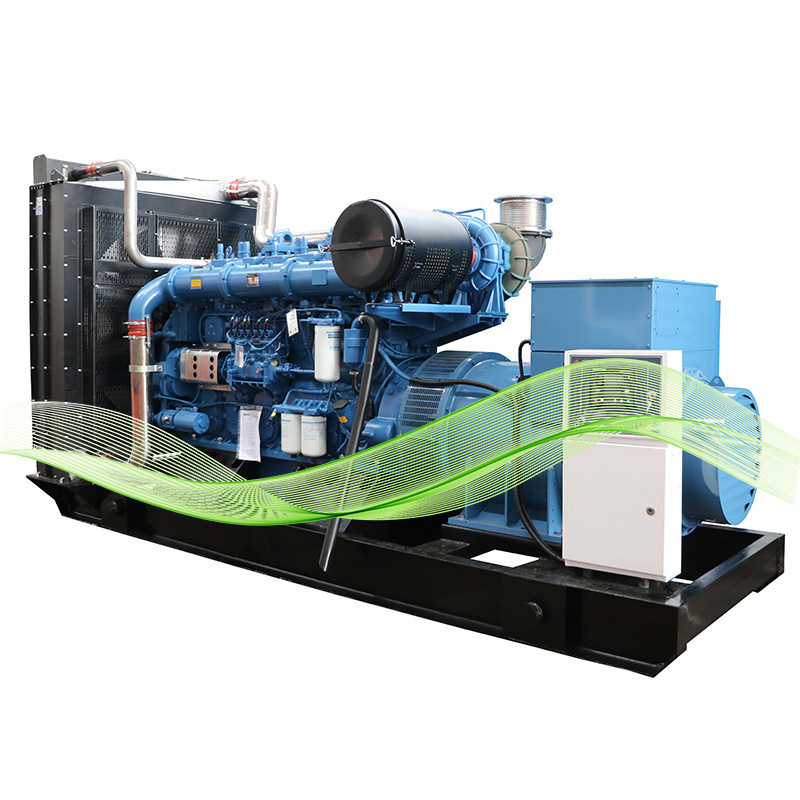
CE Certification Essentials for Gas Power Generators
Core EU Directives Governing Gas Power Generators: Machinery, EMC, LVD, and Ecodesign
For gas powered generators wanting access to the European market, there are four main EU directives they need to follow. First up is the Machinery Directive from 2006/42/EC which looks at things like mechanical dangers, how stable the machine operates during use, and proper risk assessments. Manufacturers have to meet certain standards here too, such as EN ISO 8528-5 when it comes to vibration tests and IEC 60034-1 for checking thermal performance. Then there's the Electromagnetic Compatibility or EMC Directive dated 2014/30/EU. This one keeps emissions under control so they don't interfere with other devices around them, plus checks if the generator can handle disruptions like sudden drops in voltage. Moving on to electrical safety matters, the Low Voltage Directive (2014/35/EU) covers important aspects including proper insulation, protection from shocks, and what happens when faults occur in current flow. Lastly but definitely not least important is the Ecodesign Directive established back in 2009/125/EC. This directive pushes for better energy efficiency throughout the product life cycle and requires looking at environmental impacts. As a result, designers often make changes aimed at cutting down both fuel usage and unwanted heat generation over time.
Emission & Performance Benchmarks: EU Regulation 2016/1628 and EN 61000-6-4 Requirements
According to EU Regulation 2016/1628, all stationary gas engines operating below 560 kW need to comply with Stage V emission standards. These require nitrogen oxide levels not exceeding 90 mg per kWh and hydrocarbon emissions capped at 50 mg per kWh maximum. When it comes to electromagnetic compatibility, the EN 61000-6-4 standard defines what counts as acceptable for industrial equipment. Basically, this means keeping radiated emissions under 30 dBμV/m and ensuring systems can handle voltage drops of up to 30% without any interruption in function. To prove these specs work in practice, manufacturers run extensive testing involving 500 hours of continuous operation through simulated real world conditions that mimic actual grid synchronization scenarios. Failure to meet these requirements opens the door to serious consequences under EU market surveillance rules. Fines can go well beyond 180,000 euros, which is why getting independent third party certification remains absolutely essential before any product hits the shelves.
Bureau Veritas (BV) Certification Process for Stationary Gas Power Generators
Type Approval Workflow: ISO 8528-1 Compliance, Fuel Flexibility Testing, and Safety Validation
Getting Bureau Veritas (BV) certified for stationary gas power generators starts with getting type approval according to ISO 8528-1, which is basically the worldwide standard that lays out all the rules about how these machines should perform, stay safe, and get tested. The certification process checks if the generator can handle different fuels like natural gas, biogas mixtures, and even propane blends when loads change and temperatures fluctuate outside. When it comes to safety stuff, they look at things like whether the machine will shut down automatically when needed, how fast it detects gas leaks, keeps track of exhaust temps, and maintains structural integrity even when pressure builds up inside. Manufacturers need to send in tons of paperwork including actual test results, math behind their designs, and assessments of potential risks for someone else to check over. This whole shebang usually runs around 8 to 12 weeks before ending with a Type Examination Certificate. That piece of paper becomes essential for getting the CE mark and opening doors to markets around the world.
Real-World Verification: BV-Certified Model in German CHP Application (2023 Audit Insights)
Post-certification field audits verify sustained compliance in operational environments. A 2023 audit of a BV-certified 34SG generator deployed in a German combined heat and power (CHP) plant yielded robust evidence of real-world reliability:
- 94.2% availability over 6,500 operational hours
- NOx emissions consistently below 250 mg/Nm³ despite rapid load transitions
- Seamless, automated switching between natural gas and biogas feedstocks
- Enclosure integrity maintained at 99.8% contaminant ingress prevention rate
These findings confirm that BV's certification framework bridges theoretical compliance with field-proven durability—supporting long-term asset performance and regulatory confidence.
Dual-Certified Gas Power Generators: CE + BV Approved Commercial Models
Top 4 Market-Validated Models: MTU Series 1000, Kohler PW2500G, FG Wilson P90, and Cummins GTPC-125
Four commercially deployed models exemplify successful dual certification under both CE and Bureau Veritas frameworks:
- MTU Series 1000 (200–400 kVA): Engineered for urban microgrids, featuring integrated SCR-based aftertreatment and noise attenuation compliant with ≤55 dB(A) at 1 m.
- Kohler PW2500G (375 kVA continuous): Designed for mission-critical facilities, with adaptive load management and redundancy-ready control architecture validated for hospital and data center use.
- FG Wilson P90 (90 kVA): Compact, vibration-dampened unit optimized for noise-sensitive sites—achieving <52 dB(A) at 1 m while maintaining IP54-rated enclosure integrity.
- Cummins GTPC-125 (125 kVA): Dual-fuel capable model proven across 19 European industrial installations, delivering 39% thermal efficiency—12 percentage points above the minimum Ecodesign benchmark.
All units maintain ≤55 dB(A) acoustic output and exceed EU Stage V NOx limits by at least 40%, demonstrating how dual certification drives measurable performance gains beyond baseline compliance.
Key Design Features Enabling Dual Certification: Enclosure Integrity, Control System Architecture, and Emission Aftertreatment
Three interdependent engineering strategies underpin dual CE/BV compliance:
- Enclosure Integrity: IP54-rated enclosures integrate pressure-equalization systems, explosion-relief panels, and corrosion-resistant alloys (e.g., AISI 316 stainless steel) to prevent hazardous gas accumulation and ensure personnel safety in classified zones.
- Control System Architecture: Redundant PLC-based control systems achieve <20 ms fault-response times and comply with EN 61000-6-4 immunity requirements—enabling stable operation during grid disturbances and transient loads.
- Emission Aftertreatment: Catalytic reduction modules (oxidation + selective catalytic reduction) consistently deliver NOx emissions below 100 mg/Nm³—surpassing EU Stage V limits by 40% and enabling biogas compatibility without derating.
Field data from certified installations shows 99.3% average uptime and a 92% reduction in fault escalation incidents (ISO 8528-1 Case Studies, 2024). Crucially, modular component design allows upgrades—such as catalyst replacement or firmware updates—without triggering full recertification, significantly lowering total cost of ownership.
FAQ Section
What is CE certification?
CE certification is a confirmation that a product meets EU safety, health, and environmental protection requirements. It ensures that the product is compliant with the essential directives applicable in Europe.
Why is the Bureau Veritas certification important?
Bureau Veritas certification provides independent validation that the power generator meets established standards for quality, safety, efficiency, and performance. It enhances market access and consumer trust.
What are Stage V emission standards?
Stage V emission standards limit pollutant emissions from engines used in mobile machinery and equipment. The aim is to reduce the environmental impact by controlling nitrogen oxide, hydrocarbon, and particulate emissions.
How long does it take to get Bureau Veritas certification?
The certification process typically takes 8 to 12 weeks, involving type approval exams, documentation review, and safety assessments.
Table of Contents
- CE Certification Essentials for Gas Power Generators
- Bureau Veritas (BV) Certification Process for Stationary Gas Power Generators
-
Dual-Certified Gas Power Generators: CE + BV Approved Commercial Models
- Top 4 Market-Validated Models: MTU Series 1000, Kohler PW2500G, FG Wilson P90, and Cummins GTPC-125
- Key Design Features Enabling Dual Certification: Enclosure Integrity, Control System Architecture, and Emission Aftertreatment
- FAQ Section
- What is CE certification?
- Why is the Bureau Veritas certification important?
- What are Stage V emission standards?
- How long does it take to get Bureau Veritas certification?