
 EN
EN
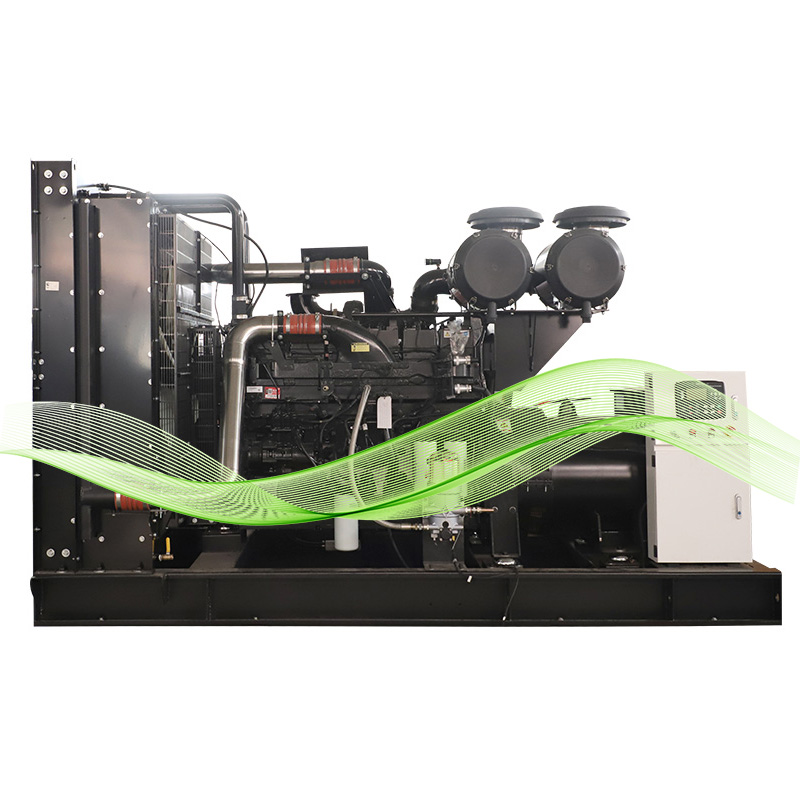
Understanding Continuous Operation Ratings: COP vs. Prime vs. ESP
Selecting the right diesel generator for non-stop applications demands clarity on critical power classifications. The ISO 8528-1 standard defines three key ratings:
- COP (Continuous Operating Power) supports unlimited runtime at constant load—ideal for hospitals or data centers needing 24/7 reliability
- Prime Power handles variable loads for ℏ500 hours/year, with 12-hour daily peaks
- ESP (Emergency Standby Power) is strictly for outage backup, capped at 200 annual hours
For true continuous operation, COP-certified units—such as select Perkins diesel generators—are essential. They undergo rigorous validation for thermal stability, component wear, and fuel efficiency under sustained loads. While Prime rating offers flexibility for intermittent demands, only COP guarantees engineered resilience for perpetual operation without derating.
| Rating | Max Runtime | Load Consistency | Annual Hour Limit |
|---|---|---|---|
| COP | Unlimited | Constant | None |
| Prime | 12 hr/day | Variable | ℏ500 |
| ESP | Outages only | Variable | ℏ200 |
COP generators feature reinforced bearings, oversize cooling systems, and precision fuel injectors to prevent degradation during extended use—contrasting sharply with ESP designs prioritizing short-burst performance.
Perkins Diesel Generator Models Certified for True Continuous Operation (COP)
400, 800, and 2000 Series: Key Perkins Diesel Generator Lines with ISO 8528-1 COP Certification
Perkins' COP certified lineup according to ISO 8528-1 standards centers around three main series: the 400, 800, and 2000 models. To earn this certification, generators must run nonstop at full load for extended periods, passing strict tests for heat resistance and mechanical strength. The 400 series works great for smaller industrial jobs needing between 10 and 100 kVA of power, offering reliable performance in tight spaces. Moving up the scale, the 800 series finds its sweet spot in commercial buildings where there's a need for both good power output (from 100 to 800 kVA) and efficient operation. At the top end sits the 2000 series designed specifically for those critical applications in utility plants and major manufacturing facilities requiring over 800 kVA. These big units come equipped with extra strong crankshafts and toughened cylinder blocks to handle the toughest conditions. What ties all these models together are shared design elements like bigger than needed cooling systems, accurate fuel delivery mechanisms, and smart alternators that keep voltage stable within plus or minus half a percent even when running flat out day after day.
Performance Benchmarks: COP Load Capacity, Thermal Management, and Runtime Limits by Model
COP-rated Perkins diesel generators sustain loads between 70–100% of prime capacity indefinitely when maintained per manufacturer protocols. Thermal management capabilities vary by series:
| Model | Cooling Capacity | Max Ambient Temp | Oil Change Interval |
|---|---|---|---|
| 400 Series | Dual-stage radiators | 50°C (122°F) | 500 hours |
| 800 Series | Triple-core + thermostatic control | 55°C (131°F) | 750 hours |
| 2000 Series | Crossflow cooling towers | 60°C (140°F) | 1,000 hours |
How long these units run depends mostly on regular maintenance work, especially checking coolant purity and making sure the particulate filters are clean. There's actually no built-in limit for how many years they should last. Looking at what happens in the field, machines keep performing well even after hitting around 30,000 operating hours as long as service appointments aren't skipped. Worth mentioning too is the 2000 series design which features those smart fan drives that adapt based on load conditions. These save about 18 percent in energy waste compared to older models with fixed speed fans when running continuously at base load levels.
Engineering Foundations of 24/7 Reliability in Perkins Diesel Generators
Robust Cooling, Lubrication, and Fuel Delivery Systems Designed for Uninterrupted Duty
The Perkins engines stay running non-stop thanks to some smart engineering tricks they've built right into their design. First off, they have these big radiators with fans that can adjust their speed depending on how hot things get when the engine is working hard for long periods. Then there's this dual cooling system that keeps the engine block separate from where the air gets heated up before entering the combustion chamber. This setup stops parts from getting too stressed out even when outside temps hit around 122 degrees Fahrenheit or higher. For lubrication, Perkins uses pumps that move plenty of synthetic oil throughout the engine with filters that catch all sorts of debris. Tests show these systems cut down on part wear by about two thirds compared to regular setups, which means longer lasting components and fewer breakdowns over time.
Critical fuel delivery innovations include:
- Common-rail injection maintaining precise pressure up to 2,500 bar
- Multi-stage filtration removing 99.9% of particulates below 5 microns
- Self-purging mechanisms eliminating air bubbles
- Water separation systems preventing microbial growth
These systems synergize to enable certified 24/7 operation. Automated monitoring constantly adjusts parameters, while heavy-duty materials like chrome-silicon alloy valve springs withstand cyclical stresses during multi-year deployments. Performance validation includes 4,000+ hour accelerated testing simulating extreme conditions, demonstrating fewer than 0.2% failure rates in continuous duty applications.
Proven Performance: Real-World COP Applications in Critical Infrastructure
Tier III Data Center in Singapore: 24/7 Uptime with Perkins 850 kVA 800 Series
In Singapore, a Tier III data center managed to keep running smoothly thanks to an 850 kVA Perkins 800 Series generator. The place needed something pretty amazing: 99.982% uptime every year just to handle all those financial transactions properly. For over a year and a half, including several times when the main power grid went down completely, this generator kept delivering steady power without any performance drop-offs. What really stood out was how well it handled heat issues despite Singapore's notoriously hot and humid weather conditions. Plus, those automatic transfer switches worked like magic whenever there were power cuts from the local utility company. Looking at things practically, getting that COP certification according to ISO 8528-1 standards wasn't just paperwork either. When considering what happens if power goes away somewhere important like this, losing even minutes can cost hundreds of thousands of dollars worth of transactions disappearing into thin air.
Remote Mining Site in Western Australia: COP Resilience Under Extreme Environmental Stress
In the heart of Western Australia's harsh outback, Perkins COP-rated generators ran non-stop for an impressive 9,000 hours through scorching heatwaves reaching 50 degrees Celsius and relentless silica dust storms. These machines kept critical ventilation systems running and powered the ore processing operations without missing a beat. Specialized air filters and innovative crossflow cooling kept things cool under pressure, while remote monitoring allowed technicians to spot potential issues before they became problems. When power fails at such remote sites, workers face serious safety risks and the company loses around $1.2 million every single hour of downtime. Despite constant fluctuations in demand from the crushing equipment, the system maintained steady output throughout the entire operation period. For mining companies operating far from grid connections, this kind of reliable performance makes all the difference between business continuity and costly shutdowns.
FAQ: Continuous Operation Ratings for Diesel Generators
What is COP in the context of diesel generators?
COP stands for Continuous Operating Power. It refers to a generator's ability to support unlimited runtime at a constant load, making it ideal for applications such as hospitals or data centers that require 24/7 reliability.
How does COP differ from Prime and ESP ratings?
While COP is for continuous use, Prime Power is designed for variable loads and limited hours (typical daily peaks), and ESP (Emergency Standby Power) is strictly for backup during outages with certification caps on annual hours.
Why are Perkins diesel generators ideal for continuous operation?
Perkins diesel generators, especially those with COP certification, are rigorously tested for thermal stability, component wear, and fuel efficiency. They are designed with reinforced components and advanced systems to ensure resilience and reliability under continuous operation conditions.
Table of Contents
- Understanding Continuous Operation Ratings: COP vs. Prime vs. ESP
- Perkins Diesel Generator Models Certified for True Continuous Operation (COP)
- Engineering Foundations of 24/7 Reliability in Perkins Diesel Generators
- Proven Performance: Real-World COP Applications in Critical Infrastructure
- FAQ: Continuous Operation Ratings for Diesel Generators